

Content:
- 1 What Is a Community Restaurant Franchise? Building a Local Institution
- 1.1 Key Takeaways
- 1.2 What Is a Community Restaurant Franchise?
- 1.3 Why Community Involvement Is a Smart Franchise Strategy
- 1.4 How a Community Restaurant Becomes a Local Institution
- 1.5 Is a Community Restaurant Franchise a Good Investment?
- 1.6 What to Look for in a Community Restaurant Franchise
- 1.7 Frequently Asked Questions
- 1.7.1 What is a community restaurant franchise?
- 1.7.2 Why should a restaurant focus on community involvement instead of just advertising?
- 1.7.3 Is a restaurant franchise profitable?
- 1.7.4 How much does it cost to open a community-centered restaurant franchise like Perkins?
- 1.7.5 How does community involvement help with hiring?
- 1.8 Start Your Community Restaurant Franchise With Perkins
What Is a Community Restaurant Franchise? Building a Local Institution
A community restaurant franchise is a proven brand and system run by a local owner who becomes a familiar face in one town. It is the kind of place where the staff learns your name and your usual order. Perkins Restaurant & Bakery. has built restaurants like that since 1957, and we help owners do the same in their own communities.
Read on to learn how a location grows into a local institution and what it takes to open a franchise like Perkins in your own community.
Key Takeaways
- A community restaurant franchise pairs a proven brand with a local owner who turns first-time guests into lifelong regulars.
- Community involvement is a business decision that builds loyalty and steadies traffic while lowering advertising costs.
- The IFA projects US franchise output will reach $921.4 billion in 2026, with full-service restaurants outpacing quick-service.
- Top-performing Perkins restaurants averaged $3,269,289 in system-wide Annual Unit Volume in 2024, per the 2025 FDD.
- The right community fit starts before opening, with help on site selection and long-term franchisor support.
What Is a Community Restaurant Franchise?
A restaurant franchise is a restaurant where an owner licenses a proven brand and system, then runs a location in one town. The company that grants the license is the franchisor. The owner who runs the restaurant is the franchisee. A community restaurant franchise isn’t just a chain location or one of dozens of restaurants in a territory; it’s an establishment locally owned and operated by people who live, shop, and work nearby.
Plenty of restaurants simply exist on a street corner. This kind of franchise is different because the owner weaves the business into local life. That owner sponsors the school team and remembers the regulars who come in every Sunday.
At Perkins, that idea goes back to our start as a pancake house in 1957. Read the history of the family restaurant franchise to see how one diner became a brand that treats guests like family.
Why Community Involvement Is a Smart Franchise Strategy
Community involvement just works as a business strategy. It builds loyalty and repeat traffic, which lowers marketing costs over time. A neighbor who already knows your restaurant needs no ad to walk through the door.
A 2020 FSR Magazine profile of one operator showed how community-focused franchisees spend less on advertising. That franchisee reported spending 50 percent less each year because local schools and families already fill his two restaurants.
Community loyalty matters more as franchising grows. The IFA’s 2026 Franchising Economic Outlook, conducted by FRANdata, projects US franchise output will rise 1.6% to $921.4 billion. It also expects more than 12,000 new franchised businesses and nearly 8.9 million jobs.
How a Community Restaurant Becomes a Local Institution
The shift from “a place to eat” to “our place” does not happen overnight. It builds through people who show up and repeat small kindnesses across years.
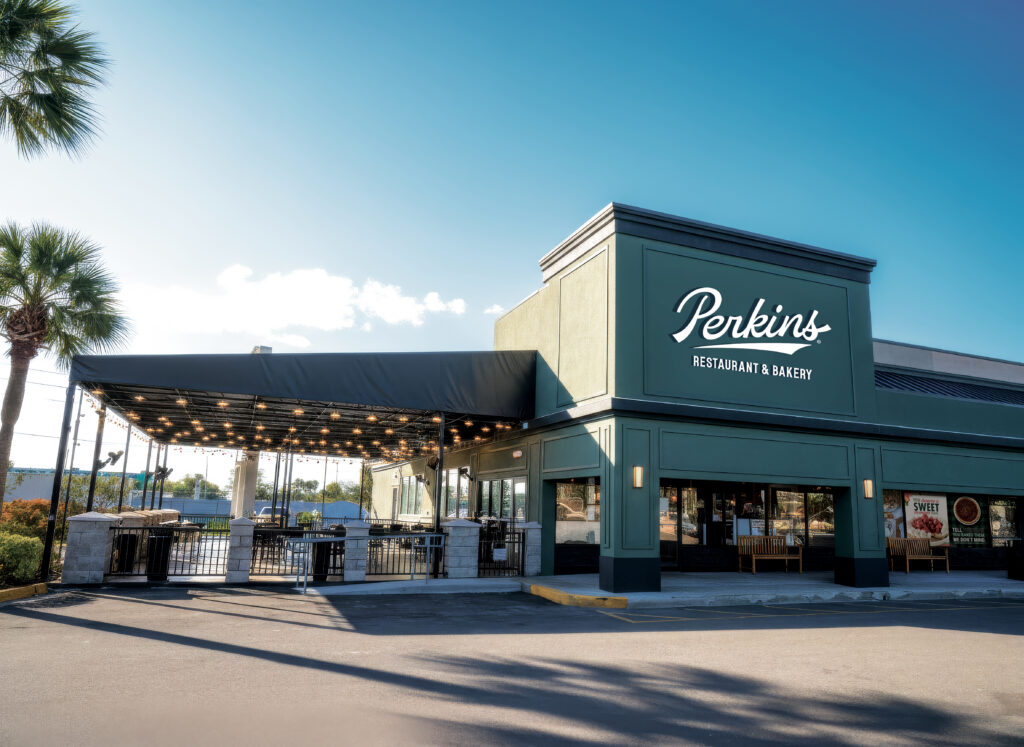
A full-service model gives owners more chances to create those bonds, from morning coffee to a late dinner. Every visit is a chance to earn a little more trust and become the spot a family picks without thinking.
Turning First-Time Guests Into Regulars
Regulars are the backbone of a full-service restaurant. Building them costs far less than chasing new guests every month.
At Perkins, restaurants blossom into places where customers love to become regulars. An all-day menu across breakfast, lunch, dinner, and late-night gives owners many touchpoints to learn names and orders.
Local Impact That Lasts
Community impact turns goodwill into a bona fide reason to dine there beyond the menu. It also creates a strong hiring pipeline. Owners who support schools and local causes attract staff who already trust the brand. In some cases, working at the restaurant can become a tradition that endures across generations.
That local spending adds up across a town. The National Restaurant Association projects US restaurant and foodservice sales will reach $1.55 trillion in 2026, with operators fueling economic growth in their communities.
The room itself is part of the draw. The NRA also found that 87% of casual dining operators say on-premises business matters more to their success than off-premises orders. A welcoming dining room is where regulars are made.
Is a Community Restaurant Franchise a Good Investment?
A community restaurant franchise that focuses on a diner-style atmosphere can be a strong investment when the brand is proven and the numbers are clear. The category is also gaining ground.
Today, full-service restaurants are outpacing quick-service in output growth, per the IFA’s 2026 outlook. That same IFA report ties the shift to diners choosing experiential dining, the first such move since the pandemic.
Perkins backs the model with real numbers. Our Item 19 performance data reports top performing stores had an average Annual Unit Volume of $3,269,289 in 2024. That figure covers all 247 Perkins restaurants open as of December 31, 2024.
Annual Unit Volume, or AUV, is the average yearly sales of a single restaurant. It gives a prospective owner a plain benchmark for what one location can bring in.
The initial franchise fee is $40,000, with a royalty of 4% of net sales. Perkins owners also contribute 3% of net sales to the national advertising fund.
Perkins’ 2025 Franchise Disclosure Document (Item 7) estimates the total initial investment for a new restaurant between $579,390 and $3,276,750, depending on the model and real estate. Our end-cap model uses a smaller footprint than a freestanding building, which lowers the cost of entry.
The model also opens more than one revenue stream. Alongside a full-service dining room, each restaurant runs an in-house bakery with pies and baked goods made fresh daily. That mix spreads sales across four dayparts, from all-day breakfast to a late-night crowd.
Perkins also lowers the barrier for those who have served. Qualifying veterans receive a 25% reduction on the initial franchise fee through our Patriot Program, part of the industry’s VetFran initiative.
Perkins’ franchise qualification requirements call for at least $1 million in net worth and $400,000 in liquid assets. A standard franchise agreement runs 20 years, long enough to build the loyalty this model rewards.
What to Look for in a Community Restaurant Franchise
Not every franchise is built for the community. When you compare brands, look for the traits that help an owner put down roots.
- Choose a brand with decades of history and loyal guests to lower your risk.
- Look for built-in charitable and in-store programs that connect you to local causes.
- Favor strong site selection guidance, because location shapes who walks in.
- Expect a dedicated field team that stays with you long after opening day.
Perkins gives every owner a dedicated Franchise Area Director and a full franchisee support platform. That help spans real estate, training, construction, and daily operations. Our corporate parent runs its own Perkins restaurants as proving grounds, so the guidance you get is tested first.
That support sits on top of Perkins’ 60-plus year story, which began with one pancake house and grew into a brand that families trust.
Frequently Asked Questions
What is a community restaurant franchise?
A community-focused restaurant franchise is a licensed brand run by a local owner who becomes part of daily life and turns guests into regulars.
Why should a restaurant focus on community involvement instead of just advertising?
Community involvement builds trust that paid ads cannot buy, and it keeps loyal guests coming back at a lower cost. FSR Magazine profiled one operator who spends far less on marketing because local families already fill his restaurants.
Is a restaurant franchise profitable?
Profit depends on the brand and location, plus disciplined cost control, so no franchise can promise a set return. As a benchmark, Perkins restaurants averaged $3,269,289 in Annual Unit Volume in 2024, per the 2025 FDD.
How much does it cost to open a community-centered restaurant franchise like Perkins?
A Perkins franchise carries a $40,000 initial franchise fee, and the 2025 FDD estimates total initial investment between $579,390 and $3,276,750 depending on the model. The end-cap model can lower entry costs with a smaller footprint.
How does community involvement help with hiring?
Owners who support schools and local teams build a reputation that draws applicants who already trust the brand. That local goodwill becomes a steady hiring pipeline over time.
Start Your Community Restaurant Franchise With Perkins
A great community restaurant is more than a business. It is a place your town leans on for good food and familiar faces.
Perkins pairs that warmth with a proven system, real first-party numbers, and support that lasts for the long haul. We treat guests like family, and we back owners the same way. Our success and yours are the same thing.
If you are ready to build something your town remembers, explore the Perkins franchise opportunity and start the conversation with our team. There is room for another 60 years of good food and good vibes in our story, and we would love your help writing it.